Ready-built facilities
Compare available factories or warehouses against layout, access, technical constraints, expansion flexibility and the practical route to operational readiness.


INDUSTRIES / VIETNAM
Choose an operating location—not just an available property.
Connect industrial parks, factories, warehouses and business premises with the commercial, workforce and infrastructure requirements of your Vietnam project.
Discuss your location decision ↗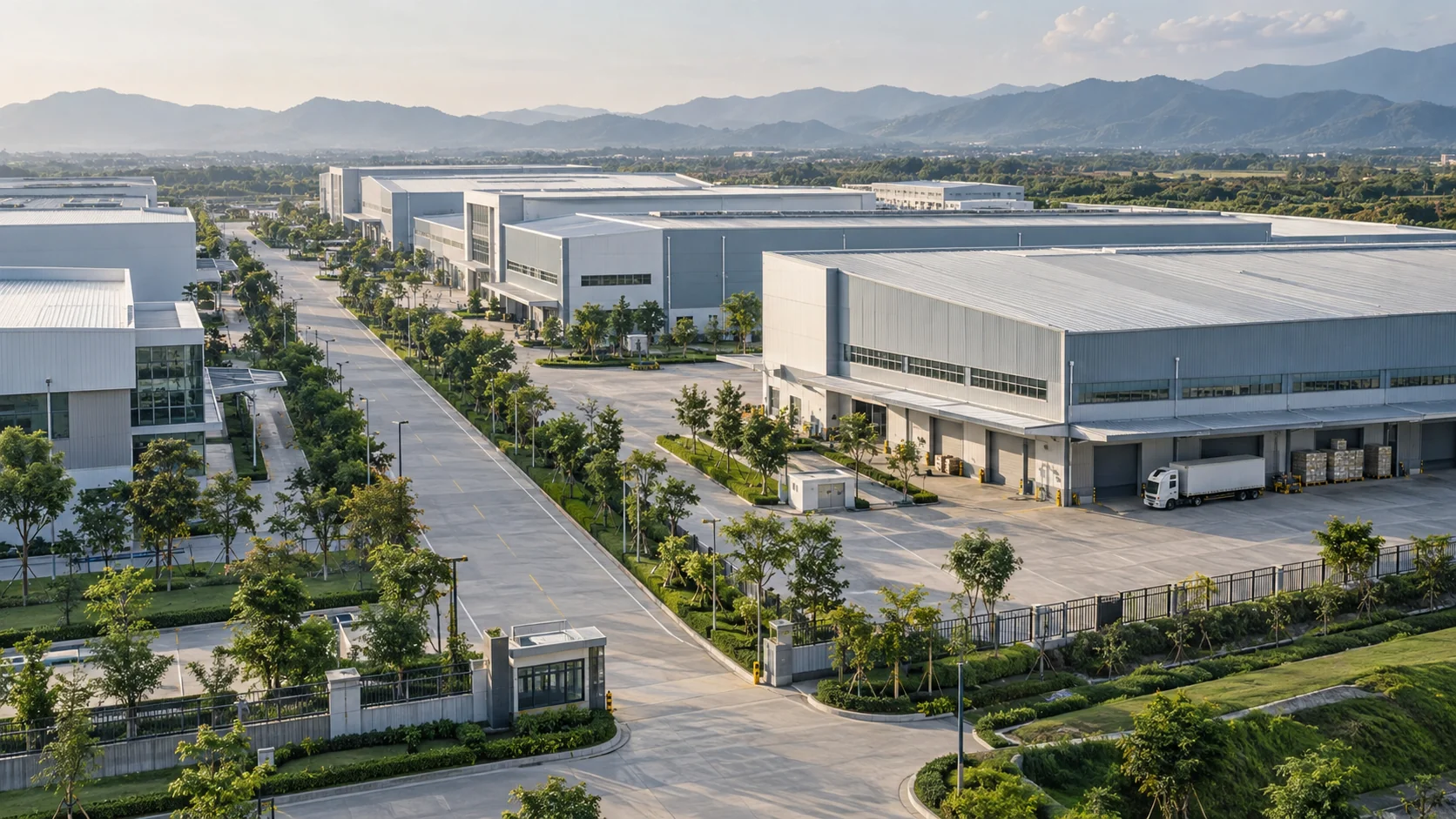
MATCH THE FOOTPRINT TO THE BUSINESS
A production project, a distribution operation and a developer’s tenant proposition should not start with the same property checklist. Define the intended activities, capacity and timetable before comparing sites.
Compare available factories or warehouses against layout, access, technical constraints, expansion flexibility and the practical route to operational readiness.
Connect a proposed development with the operating specification, investment horizon, delivery responsibilities and dependencies that could affect the launch timetable.
Assess target tenant segments, commercial positioning, service propositions and the relationships needed to support an industrial ecosystem.
For headquarters, regional offices and service operations, compare customer access, staff commuting, space flexibility, fit-out needs, business continuity and total occupancy costs. A prestigious address is useful only if it supports the way the business needs to work.
COMPARE WHAT ENABLES THE OPERATION
Map the flows that matter to the project: customers, inputs, ports and distribution points. Test journey times and service reliability, not only map distances.
Examine the skills, supervision, commute and recruitment assumptions behind the operation. Connect the site decision with the staffing and training plan.
Specify capacity, connection timelines, loading, floor space and handling needs. Identify which claims need utility-provider evidence or qualified technical review.
Compare fit-out, infrastructure connections, maintenance, service charges, logistics and transition costs alongside headline rent or land pricing.
Review delivery responsibilities, service standards, management information, escalation paths and the evidence supporting proposed completion dates.
Assess future capacity, alternative sites, access constraints and business-continuity requirements before committing to a long-term footprint.
A PRACTICAL LOCATION BRIEF
Activities, equipment and space needs, target output, utility demand, cargo flows, staffing and customer requirements.
Investment horizon, budget, launch timetable, fit-out needs, growth scenarios and the cost of delayed readiness.
Current availability, drawings, quotations, service terms, delivery commitments and supporting utility or access information.
Property rights, permitted activities, planning, construction, environmental and safety matters to be assessed by appropriately qualified professionals.
WHAT YOU TAKE FORWARD
A common specification and decision criteria for comparing regions, parks and individual facilities.
Commercial and operating trade-offs, substantiated findings, unanswered questions and conditions for further assessment.
Developer, utility, fit-out, staffing and specialist workstreams with owners, dependencies and management decision gates.
The advisory scope is defined around the decision. Commercial location assessment does not replace property brokerage, valuation, legal due diligence, engineering inspection or formal approval.
Market entry & company setup ↗Operations & supply chain advisory ↗BEFORE THE FIRST DISCUSSION
This page focuses on the location, facility and industrial-park proposition. Manufacturing advisory addresses the wider production model, process transfer and supplier qualification. A mandate can connect the two where your decision requires it.
The scope described here is commercial and operating-location advisory. Brokerage, valuation, legal property review and technical inspection are separate professional activities that must be explicitly assigned where needed.
Yes. A focused comparison can test the most important conditions before a wider commitment. The depth of site visits, developer engagement and specialist review should be agreed in the scope.
A non-confidential outline of the intended activities, approximate space and utility needs, location constraints and decision timetable. Detailed plans and confidential agreements can follow through agreed channels.
CONNECT THE PROPERTY WITH THE OPERATING CASE
Tell us whether you are selecting a first site, expanding an existing footprint or developing an industrial-park proposition.
Discuss your project ↗Explore all industries ↗