

FROM PRODUCT TO COMMERCIAL MODEL
Choose the question your growth plan needs to answer.
A food brand entering the domestic market, a processor developing supply and an investor assessing a platform face different decisions. We frame the work around the product, customer, supply requirement and intended role in the value chain.
Find a viable route to customers
Assess demand, positioning, channel requirements and potential partners for food, beverage, ingredients or agricultural products.
Test the fit between the offer, the buying criteria and the commercial model needed to reach the intended customer.
Build a dependable supply model
Examine supplier capabilities, seasonality, processing interfaces and delivery requirements.
Connect the sourcing thesis with specifications, qualification needs, procurement governance and continuity planning.
Assess the commercial platform
Test the assumptions behind an acquisition, investment or partnership across a food or agricultural value chain.
Examine customer access, supplier dependence, operating constraints and the questions for specialist diligence.
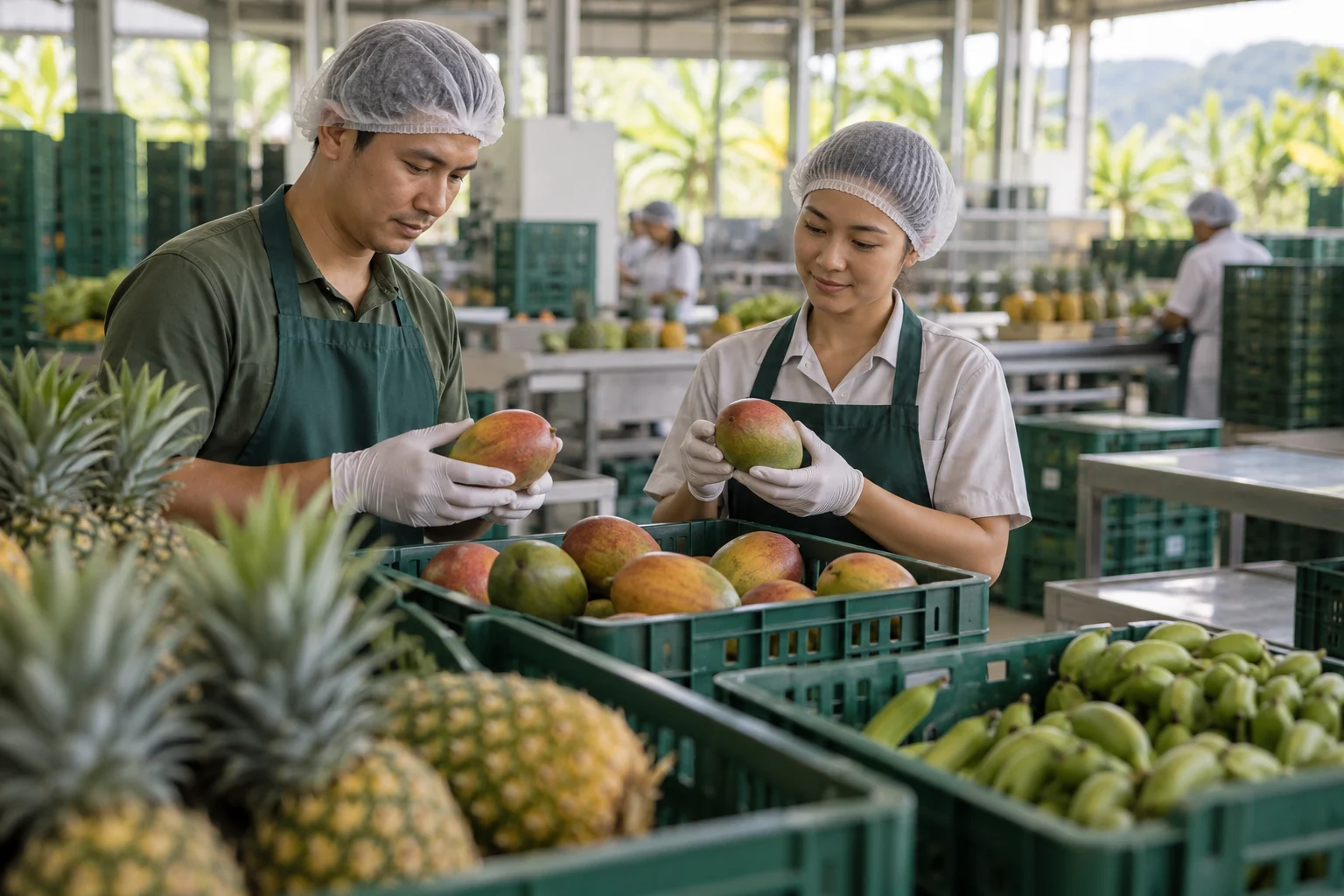
EXAMINE THE HANDOVERS
Follow the product through the value chain.
Commercial performance depends on connected activities. A sourcing or market-entry assessment should examine where the product, information and responsibility change hands.
Not every assignment needs to cover the whole chain. The brief should identify the interfaces that matter to the decision.
Inputs & supply
Supplier options, availability, seasonality, specification fit and concentration.
Processing
Capability, capacity, quality interfaces and dependence on particular facilities.
Storage & transport
Handling requirements, lead times, cold-chain needs where relevant and delivery handovers.
Distribution
Channel access, commercial incentives, coverage and responsibility for customer service.
Customer
Buying criteria, product positioning, repeat-purchase assumptions and feedback to the supply model.
QUALIFY AGAINST THE REQUIREMENT
A capable partner for which product and market?
A supplier or distributor should be assessed against explicit requirements, not a generic reputation. We help organise the commercial criteria and questions for technical, food-safety and market-access specialists.
Product and specification fit
What evidence is needed to show that the partner can meet the proposed product, handling and service requirements?
Capacity and continuity
How do seasonal variation, dependencies or competing demand affect the proposed sourcing and delivery model?
Market and channel fit
Can the partner reach the intended buyers, support the positioning and provide useful information on sales and customer needs?

MAKE THE FINDINGS ACTIONABLE
Outputs aligned with the commercial decision.
Market and channel brief
Customer segments, buying requirements, alternatives, positioning questions and distribution options.
Supply and partner map
Potential options, comparison criteria, qualification questions and evidence gaps.
Value-chain assessment
Critical handovers, constraints, continuity exposures and interfaces with specialist review.
Growth or investment roadmap
Priorities, owners, dependencies and the evidence required before further commitment.

Case Study
Testing an ingredient sourcing model.
Imagine a regional food manufacturer assessing a Vietnamese sourcing option. The decision depends on specification fit, seasonal availability, processing interfaces and the route to the intended destination.
A possible scope would compare supplier options, map handling and delivery dependencies, and identify the questions for testing, food-safety and trade specialists. Illustrative outputs could include a qualification framework and a supply-chain issues register.
DEFINE THE PRODUCT AND THE DECISION
Questions before starting.
Can you assess domestic and export-oriented opportunities?
Yes. The scope should identify the intended customer and destination because channel, specification and market-access requirements may differ.
Do you provide laboratory testing or food-safety certification?
No such service is implied. Testing, inspection and certification should be assigned to qualified providers, with the required standards and scope agreed separately.
Can supplier work focus on one input or product category?
Yes. A focused assignment can define the requirement, compare options and organise qualification questions without claiming to assess the entire supply network.
What should be available for the first discussion?
A non-confidential product description, the proposed market or sourcing requirement, expected scale and the main uncertainties are useful. Agree a suitable information-sharing process before providing sensitive specifications or contracts.
CONNECT MARKET AMBITION WITH SUPPLY REALITY
Which part of the value chain needs a clearer decision?
Tell us the product, intended customer or sourcing requirement and the questions standing between your plan and implementation.
Discuss your food or agribusiness project ↗